Crayon Monogram Svg
In the landscape of digital design assets, particularly those catering to the education sector and small-scale craft businesses, specificity often dictates utility. The Crayon Monogram Svg represents a niche but highly functional intersection of playful aesthetics and professional-grade vector formatting. For educators, parents, and creators looking to produce personalized materials for back-to-school events, classroom decorations, or teacher appreciation gifts, this specific asset offers a streamlined solution. It is not merely a decorative image; it is a structured digital file designed for scalability, customization, and integration into various production workflows.
This analysis examines the practical value of the Crayon Monogram SVG, evaluating its technical specifications, design intent, and suitability for different user groups. By breaking down the components of the file package and the implications of its vector nature, we can determine how effectively it serves both novice hobbyists and experienced small business owners.
Design Intent and Visual Characteristics
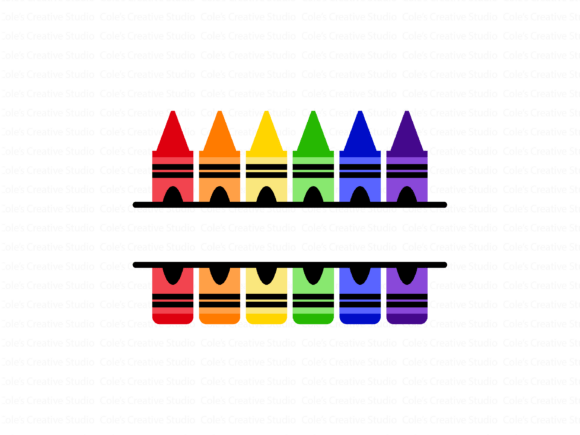
The core appeal of the Crayon Monogram SVG lies in its thematic resonance. Education is inherently colorful, dynamic, and creative, yet many school-related designs can fall into the trap of being overly cluttered or visually chaotic. This design addresses that by centering on a single, recognizable motif: a rainbow spectrum of crayons arranged to form or frame a monogram letter. The use of crayons immediately signals childhood, learning, and creativity, making it an intuitive choice for kindergarten through fifth-grade contexts.
From a visual standpoint, the hand-designed nature of the graphics suggests attention to detail that automated generators often lack. Hand-drawn elements tend to have organic lines and varied weights, which lend a sense of warmth and authenticity to the final product. In a market saturated with clipart, this distinction matters. When applied to physical products such as t-shirts, tote bags, or printed cards, these subtle variations prevent the design from looking sterile or mass-produced.
The "rainbow spectrum" aspect ensures broad appeal without relying on a single color bias. This neutrality allows the design to fit within diverse classroom themes, from primary color schemes to more pastel-oriented decor. However, users should note that while the concept is versatile, the execution is fixed in terms of composition unless edited in compatible software. The strength here is in its ready-made aesthetic; it requires minimal interpretation to understand its purpose.
Technical Specifications and File Format Utility
The true value of the Crayon Monogram SVG extends beyond its visual appearance to the technical formats provided. The inclusion of four distinct file types—SVG, PNG, JPG, and EPS—caters to a wide range of hardware and software capabilities. Understanding the role of each format is crucial for maximizing the asset’s utility.
- SVG (Scalable Vector Graphics): This is the primary format for most modern cutting machines like Cricut and Silhouette, as well as web-based design tools. As a vector file, the Crayon Monogram SVG maintains crisp edges at any scale. Whether you are designing a small sticker or a large banner, the quality remains consistent. Furthermore, because it is vector-based, individual elements can often be recolored or resized independently, offering significant flexibility for customization.
- PNG (Portable Network Graphics): Provided with a transparent background, the PNG file serves as a bridge for users who may not have vector-editing software. It is ideal for direct printing onto sublimation blanks or for overlaying designs in programs like Canva or Photoshop. The transparency ensures that no white box surrounds the crayon graphic when placed on colored backgrounds.
- JPG (Joint Photographic Experts Group): While less flexible than vector formats, the JPG file provides a rasterized version for quick previews or for use in platforms that do not support transparent backgrounds. It is useful for social media thumbnails or simple print jobs where editing is not required.
- EPS (Encapsulated PostScript): This legacy vector format is essential for compatibility with older desktop publishing software such as Adobe Illustrator versions prior to recent updates, or for sending files to professional print shops that require EPS input. Its inclusion ensures that the asset is not locked out of traditional professional workflows.
This multi-format approach reduces friction in the user’s workflow. A creator can start with the SVG for precision cutting, switch to the PNG for digital mockups, and use the EPS for high-resolution commercial printing. This versatility is a significant strength, particularly for entrepreneurs who manage multiple production channels simultaneously.
Practical Applications and Use Cases
The Crayon Monogram SVG is best suited for projects that benefit from personalization and educational theming. Its primary applications fall into three categories: apparel, classroom decor, and promotional merchandise.
In the realm of apparel, this design works exceptionally well for teacher shirts, student ID badges, or school spirit wear. The monogram element allows for personalization, such as adding the first initial of a teacher’s name or a student’s grade level. For example, a teacher might use the design with their own initial on a tote bag used for carrying grading supplies. The vibrant colors translate well to fabric, especially when using heat transfer vinyl (HTV) or direct-to-garment printing.
For classroom decor, the asset can be scaled up for bulletin board headers, door signs, or welcome posters. The hand-designed crayon motif adds a touch of whimsy that engages young learners. Because the vector file can be enlarged without pixelation, educators can create large-format prints that remain sharp and clear from a distance.
Small business owners selling on platforms like Etsy or at local craft fairs can leverage this design to create low-cost, high-perceived-value items. Stickers, magnets, and keychains featuring the Crayon Monogram SVG are popular back-to-school items. The ability to recolor the crayons in the vector file allows sellers to match seasonal trends or specific school colors, enhancing the product’s relevance.
Evaluation of Quality and Limitations
When assessing the quality of the Crayon Monogram SVG, several factors contribute to its overall effectiveness. The hand-designed origin implies a level of craftsmanship that avoids the generic look of stock vectors. The line work is likely clean, and the composition is balanced, ensuring that the monogram remains legible even when simplified for smaller cuts.
However, there are inherent limitations to consider. The most significant constraint is the color discrepancy between digital screens and physical outputs. As noted in the product description, colors may differ between computers and printers. This is a universal challenge in digital design, but it is particularly relevant here because the "rainbow spectrum" relies on accurate color representation. If a user intends to replicate exact brand colors or specific school colors, they must calibrate their monitors and printers carefully. The disclaimer regarding color matching is not just a legal formality; it is a practical warning that screen preview is not a guarantee of final output.
Another consideration is the complexity of the cut lines. Depending on the density of the crayon details, very fine lines may pose challenges for entry-level cutting machines. Users should test the design on scrap material before committing to expensive substrates. Additionally, while the SVG is scalable, extremely small sizes may lose detail. For instance, if used on a tiny pin or a small button, the individual crayon tips might become indistinguishable, resulting in a muddy visual effect. In such cases, simplifying the design in a vector editor would be necessary.
Who Should Use This Asset?
The Crayon Monogram SVG is most beneficial for individuals who value efficiency and customization. Teachers and administrators who need to quickly produce personalized materials will appreciate the ready-made nature of the design. Parents creating custom school supplies for their children will find the monogram feature appealing for organization and identification.
For freelancers and content creators, this asset serves as a reliable component in larger projects. Bloggers writing about back-to-school tips can use the PNG for featured images, while marketers can adapt the SVG for email newsletters or social media graphics. The presence of the EPS file makes it suitable for agencies that need to integrate the graphic into broader brand campaigns.
Conversely, users who require fully editable, abstract shapes or minimalist designs may find this asset too thematic. If the goal is a sleek, corporate aesthetic, the playful crayon motif may be inappropriate. Similarly, those without access to cutting machines or vector software may find the SVG format less immediately usable, though the included PNG and JPG files mitigate this issue.
Final Assessment
The Crayon Monogram SVG stands out as a well-rounded digital asset that balances aesthetic charm with technical robustness. Its hand-designed quality provides a unique character that resonates with the educational community, while the comprehensive file package ensures compatibility across various devices and production methods. The emphasis on vector scalability and multi-format support reflects a thoughtful approach to user needs, acknowledging that creators work in diverse environments.
While color accuracy requires careful management and extreme miniaturization may compromise detail, these are minor considerations in the context of its intended use. For anyone involved in creating personalized, school-themed materials, this asset offers a practical, professional, and visually engaging solution. It eliminates the need to commission custom illustrations while providing enough flexibility to meet specific project requirements. Ultimately, the Crayon Monogram SVG is a valuable tool for bringing a pop of color and personality to educational projects, bridging the gap between digital convenience and tangible creativity.